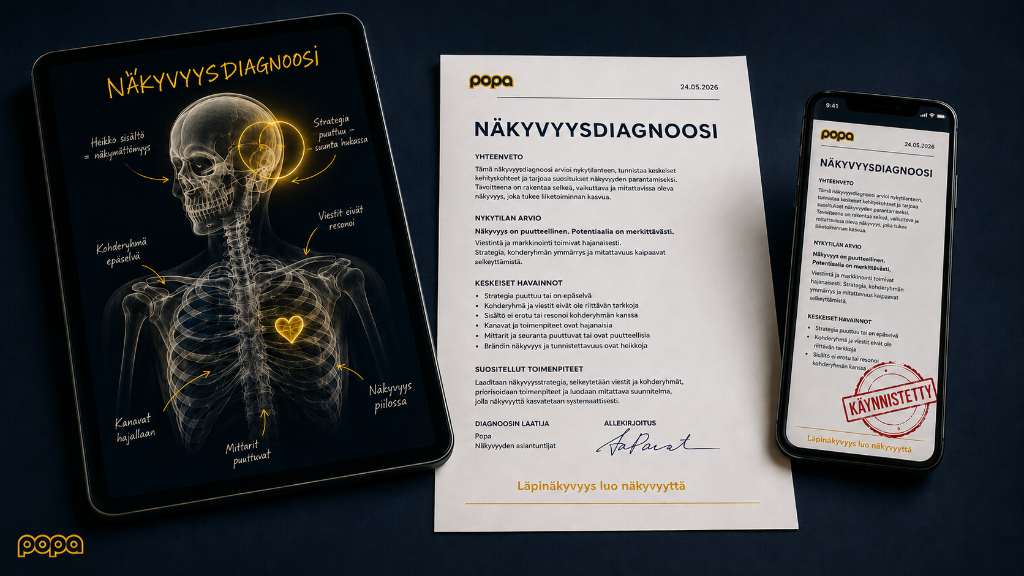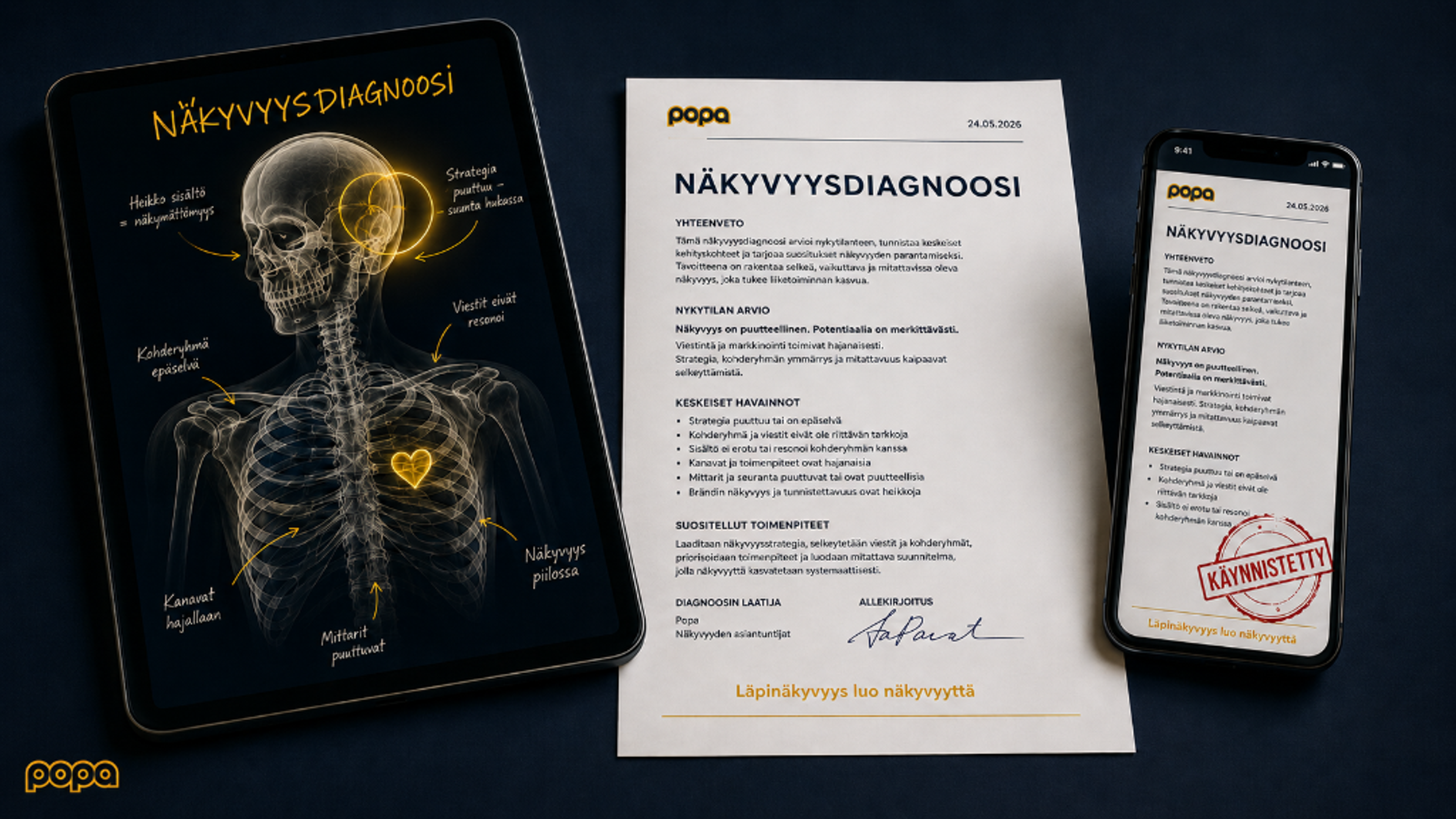
You do not go to the doctor and say do something. First you describe where it hurts. The doctor examines, and only then is treatment agreed on. Visibility marketing works by the same logic.
Three Questions, Three Seconds
Visibility is measured faster than you might think. Three seconds. That is how long a passer-by has to form a first impression of a light sign, window graphic, or directional sign.
Ask three questions: What did you see? What do you remember? Where were you directed? If you cannot answer them, your visibility materials are not doing what they should. They work poorly or not at all.
Testing Does Not Happen in the Office
The biggest misconception in assessing visibility is that materials are viewed on a screen or on a desk. A light sign looks good on a monitor. Window graphics seem clear in a file. Signage looks neat in print.
But your customer is not standing in your office. They look at a light sign from 50 metres away through backlighting. They read window graphics from a passing car. They search for a directional sign in a busy car park with five seconds to spare.
Diagnosis must be done where the material actually works.
The Material Determines, Conditions Test
Different materials require different assessment. A light sign is tested in dim light and with backlighting, precisely the conditions in which it does most work. Window graphics are viewed from within passing traffic. A printed product is seen on a desk among other brochures and in hand with a five-second glance.
A diagnosis is not a general checklist. It is a material-specific assessment based on how each solution performs in real conditions at real distances.
A Recurring Finding
The most common finding is not that the material looks bad. Most often it is that the material has never been tested in its real environment.
The light sign was photographed on a clear day. The window graphic was viewed while stationary from the owner's own driveway. The signage was installed and noted to be where it should be. Nobody stood 50 metres away in the dark and asked: can you see this?
At Popa we often encounter situations where the solution is technically sound but has never been viewed through a customer's eyes.
Treatment Follows Diagnosis
We choose treatment based on diagnosis. It might be adjusting a light sign's brightness or changing its installation angle. Simplifying window graphics so the main message registers in two seconds. Repositioning signage so it is visible from the intersection.
Or an entirely new solution. Window graphics that turn a ground-floor premises into street-level advertising space. A short video that says in one minute what cannot be said in text. Unifying the visual identity so the brand is recognisable everywhere.
The right solution only becomes clear once you know the foundation. The process takes a few hours. It includes an initial conversation, analysis, and a written report. If you go ahead with any action at Popa based on the diagnosis, we credit the assessment fee in full.