The typical obstacle is not knowing where to begin, which format to choose, or how a single piece serves the overall impression of your company's voice.
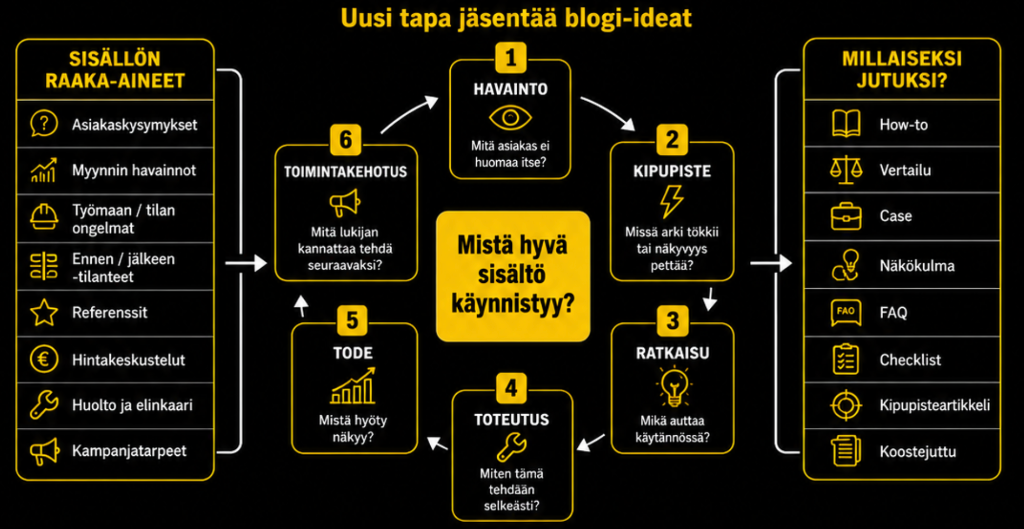
You Have More Raw Material Than You Think
Good marketing content does not start in a brainstorming session. It can start with a question a customer asked last week. Or a situation where you had to explain why one solution works better than another. Or a reference project sitting as photos in a service folder but nowhere else.
You have all of this ready now:
- customer questions
- observations from sales conversations
- before/after situations
- pricing discussions
- maintenance and lifecycle topics
- timely campaign ideas
All of these just need to be shaped into engaging content.
Six Steps Behind a Good Piece
At Popa we have noticed that effective content often follows the same path. It starts with an observation: what does the customer not notice on their own? A light sign's brightness fades gradually. The observation is followed by a pain point: where else does visibility start to fail?
Write with specifics: materials, timelines, prices. Not generic advanced solutions or tailored approaches. Say what actually happens, what an order requires, how long it takes, and what comes out of production. Describing the process is often the most useful part of any piece.
A good piece needs evidence. One concrete example is enough: customers find you more easily, enquiries increased within two months, or the facade is now visible from the shopping centre car park after dark. Finish with a clear call to action. One step, not a confusing list of options.
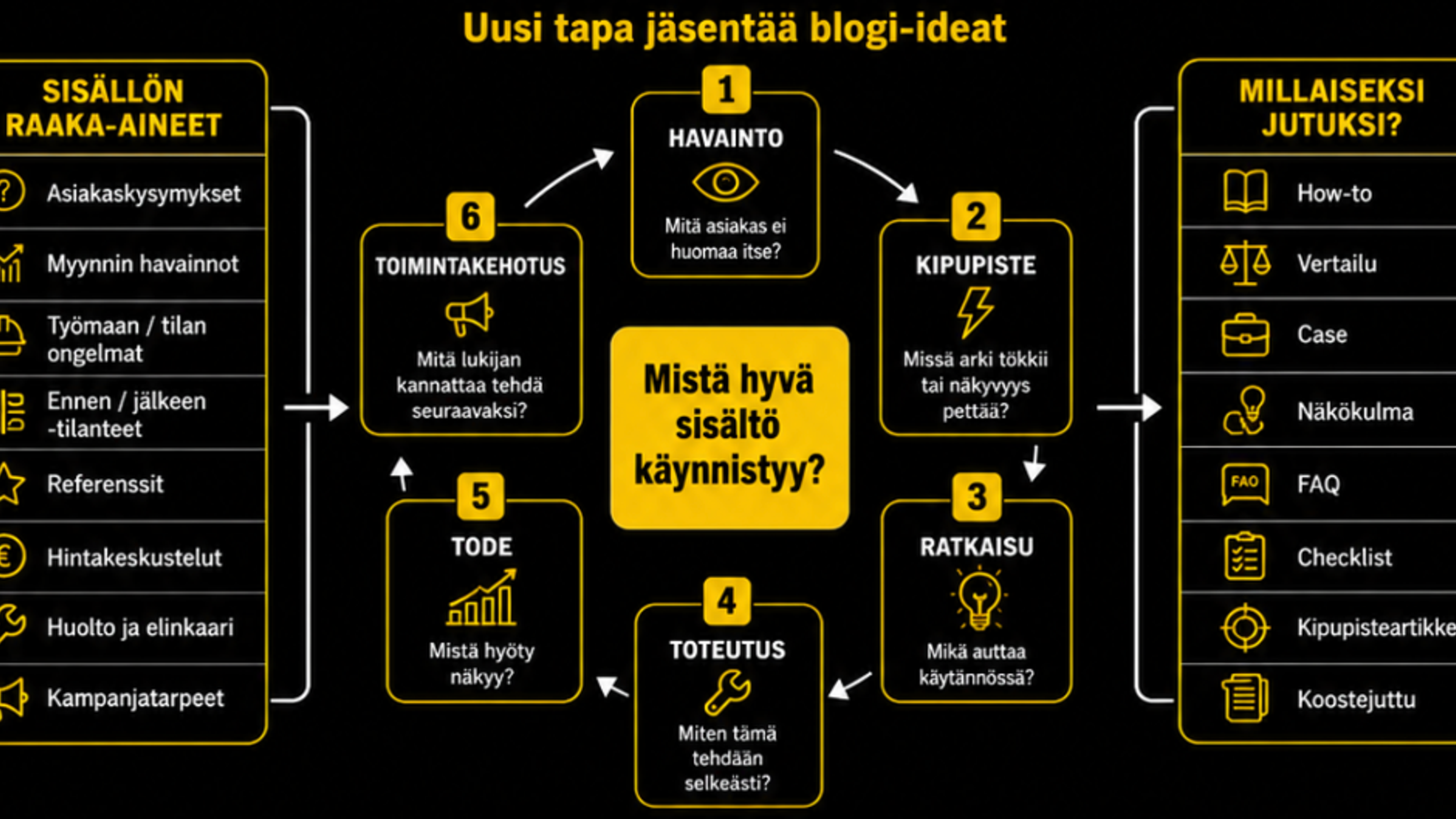
A new way to structure your blog ideas
Choosing a Format Is a Technical Decision, Not a Creative One
Once you know what to write about, the format follows quickly. How-to works when the reader is looking for practical guidance. A case study builds trust when you already have a reference to show. Comparison and FAQ formats are most effective when the same question comes up in sales conversations week after week.
You do not need to do everything at once. One well-made piece published calmly is worth more than six rushed pieces in the same month that nobody reads to the end.
Before You Start
Write the background and the solution to an observation or challenge identified with a customer clearly enough that it helps the next person who encounters the same situation.