March is over and the season quietens. The last snowmobilers have left, the cabins have been emptied, and the calendar shows something other than full for the first time in months. Right now, when you can catch your breath, is the best moment to look at your visibility as a whole.
A tourism entrepreneur in Lapland tends to build visibility the same way as the season itself: in a rush, one fire at a time. A sign is ordered when the old one has faded. A brochure is updated when prices change. A light sign comes up for consideration when the neighbour's new sign starts to bother you. Visibility gets built, but not systematically.
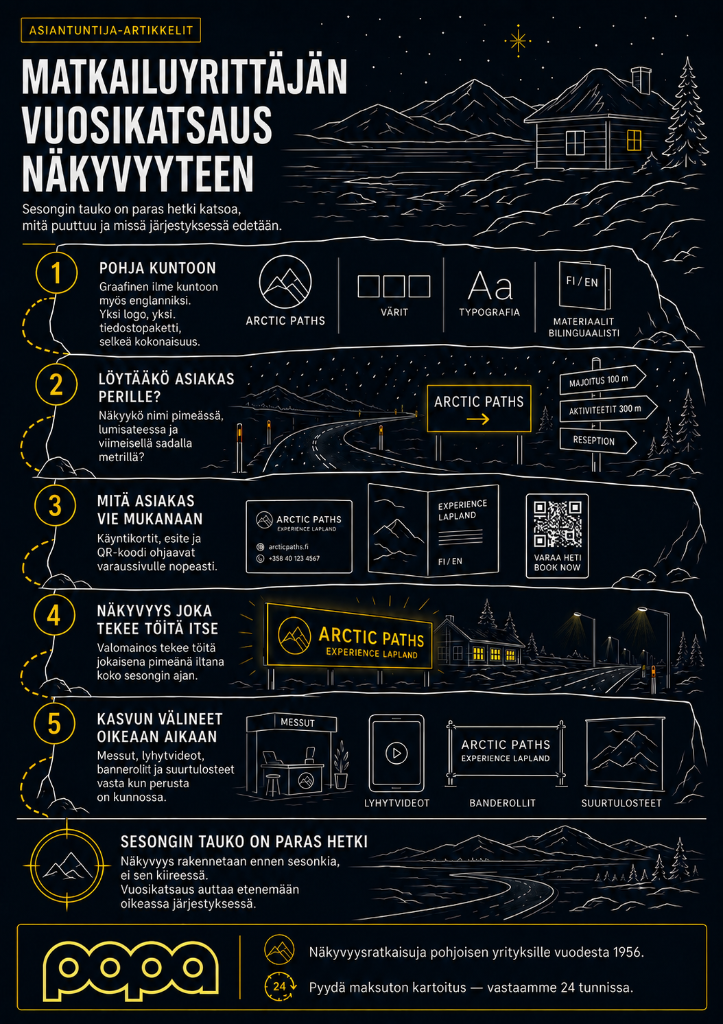
The season break is the moment when you stop and look at where things stand and what makes sense to do next. The order matters.
First Layer: Is the Foundation Sound in English Too
All visibility rests on a visual identity. For a tourism business in Lapland, that also means bilingualism. Logo, colours, and typefaces are the foundation, but in the tourism sector it also includes how your business appears to an international customer for the first time.
In the annual review, it is worth asking: does the visual identity work just as well in an English brochure as in an advertisement aimed at Finnish customers? A safari operator we have worked with at Popa noticed that their logo had been translated into different forms in different materials in different years. A consistent set of files was completely absent.
That is fixable. But it is worth doing first.
Second Layer: Can the Customer Find You in the Dark
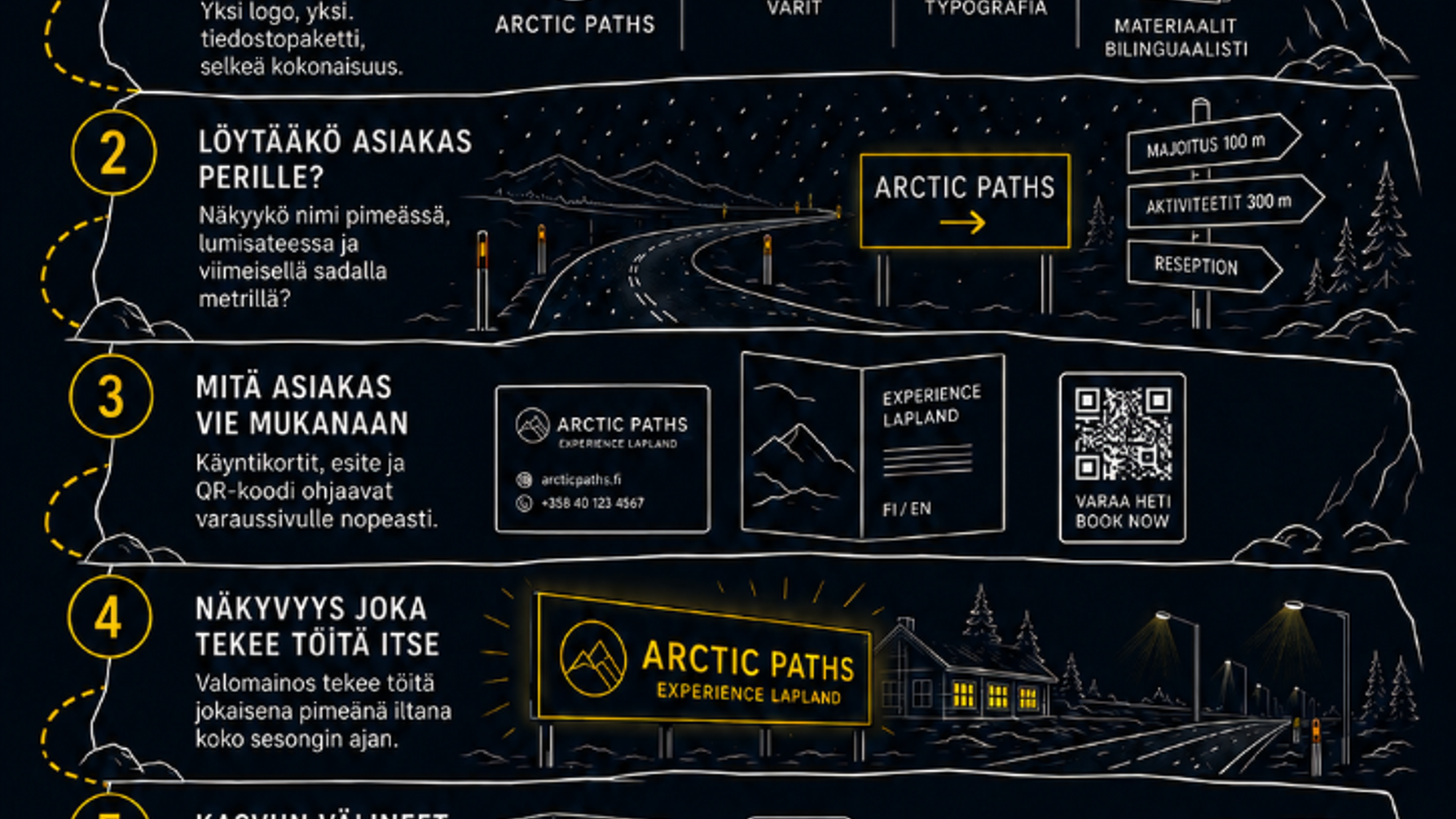
In Lapland this layer is particularly critical. The busiest time of the winter season falls between December and March, when the darkness is at its longest. Customers find the address on their phone, but the final stretch is navigated using the destination's signage.
The absence of a sign or window graphic does not feel like a big deal until you are guiding the fourth customer in a row by phone on which way to turn. A working illuminated sign or clear directional sign typically costs 300 to 800 euros. During the season it saves hours.
In the annual review, check: does your premises stand out clearly in the dark? Is the name visible in snowfall? Do signs direct correctly even when the customer is in the area for the first time?
Third Layer: What the Customer Takes With Them
In the tourism sector, contact materials play a special role. The customer has often come from far away and wants something concrete to take as a reminder or to recommend to others. A business card with a QR code linking directly to the booking page is faster than any explanation.
A bilingual brochure or activity card serves both Finnish and international guests. These materials do not date quickly if the foundation is solid and the prices have been updated.
In the annual review, check: is your English-language material up to date? Does the QR code go to the right place? Is the logo file the same as the one used in your current materials?
Fourth Layer: Visibility That Requires No Presence
In Lapland a light sign is a different matter than in southern Finland. Four months of almost complete darkness means the light sign works every evening throughout the entire season. It distinguishes you from others when customers drive repeatedly past the reindeer sleigh route or snowmobile trail.
A light sign starts at around 1,500 euros. Made once, visible for several seasons. This layer comes naturally after signage and visual identity are in order. Not the other way around.
Fifth Layer: Growth Tools at the Right Time
Trade shows, short-form videos, banners, and large-format prints are valuable when operations are established and you have something new to say. Travel fairs in Helsinki in January or ITB Berlin in March are venues where Lapland's tourism offer competes internationally. A trade show booth without proper materials is a wasted investment.
In the annual review you can ask: is attending a trade show or producing video content relevant this year? If not, that is not a problem. It is a sensible decision.
The Season Break Is the Best Moment
A tourism business's visibility is not built during the rush of the season. It is built before it. The annual review is the moment when you look at where things stand and build the next layer before customers arrive again.